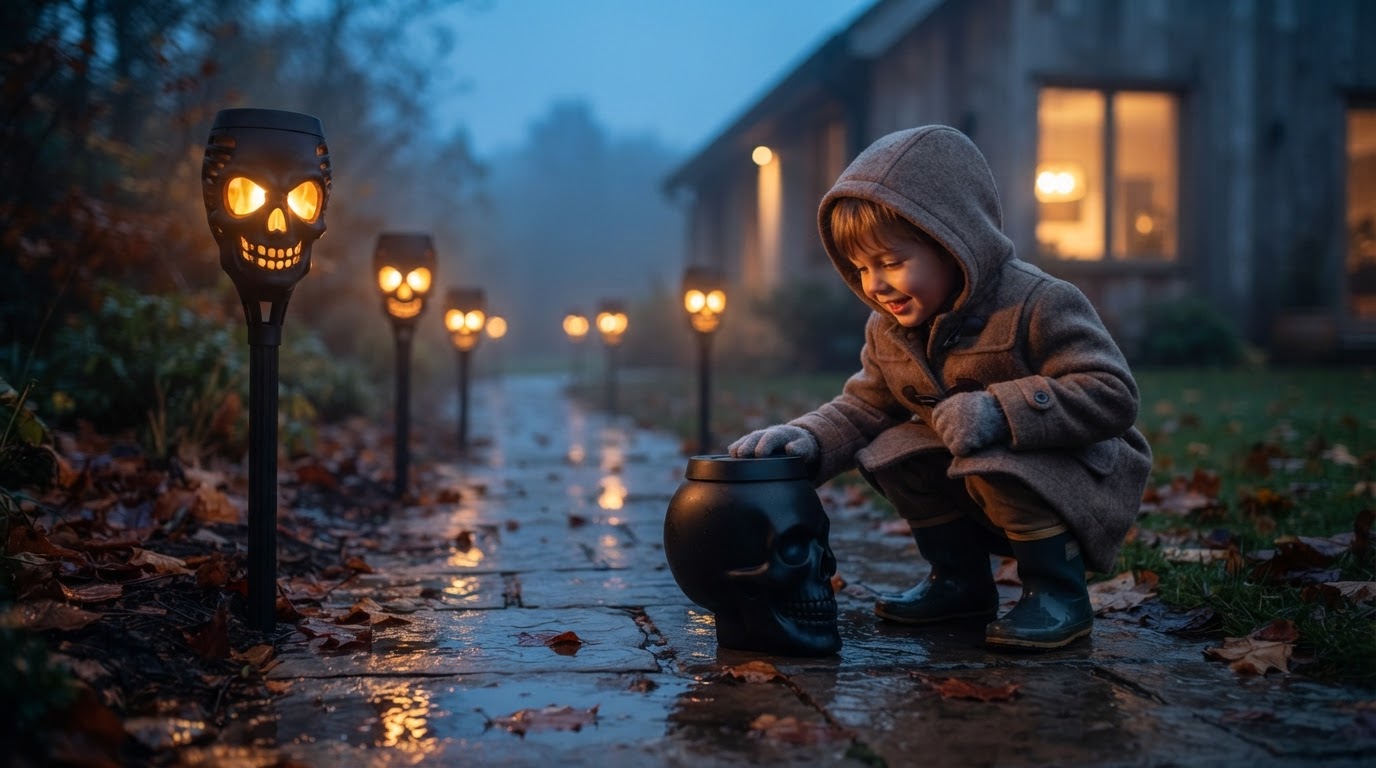
Installing Waterproof Solar Skull Torch Lights for Safety
 Sam VasquezBuying Guide Lead
September 23, 2026. This technical overview covers the installation and maintenance of moisture-resistant pathway illumination for autumn landscapes. It is written for property owners who require reliable decorative lighting that functions through heavy rain and frost.
The Challenge of Maintaining Outdoor Seasonal Lighting
Setting up a spooky outdoor solar lighting decoration involves more than just aesthetics; it requires equipment that can survive the unpredictable transition from late September into November. Most standard decorative stakes fail because they lack proper sealing against moisture ingress. When water enters the internal circuitry of a solar device, it causes rapid corrosion of the battery terminals and the PCB, leading to flickering or total failure within weeks. According to Spooky Setup, high-quality solar skull lights are typically made of weather-resistant resin to withstand rain, sun, and even frost, which is essential for any equipment remaining outdoors during the cooling months.
I have seen many homeowners struggle with halloween skull garden stakes that look great for three days and then die after the first heavy thunderstorm. If you are on a budget, you might be tempted by the cheapest plastic wired options found at big-box retailers, but those often require manual wiring that isn't rated for wet soil. The primary issue with wired pathway systems is the risk of a short circuit in the line if the insulation is nicked by a shovel or lawn mower. Solar-powered units eliminate this risk by keeping the energy source and the light contained in a single, sealed housing. Between the two, I'd go with solar every time for a temporary seasonal setup because it removes the need for digging trenches or running extension cords across a wet lawn.
How Solar Skull Torch Lights Solve Moisture Issues
Solar Skull Torch Lights utilize a specific construction method designed to isolate the internal LEDs and solar cells from environmental humidity. These units are built with a focus on durability, utilizing high-quality plastic or resin materials that do not become brittle when exposed to UV rays or freezing temperatures. Unlike the skull garden torches solar powered models that use thin, porous plastics, these torch lights feature a sealed solar panel integrated directly into the top of the skull. This design ensures that water runs off the surface rather than pooling around the electronics.
As noted by At Home, these types of solar powered stake lights are designed to automatically charge during the day and activate at night, providing a warm, flickering flame effect that mimics real fire without the hazard of an open flame in dry autumn leaves. Here's what I'd actually buy: a set that uses a flickering LED module rather than a static bulb. The flicker effect masks the individual LED diodes, creating a more realistic look while the housing protects the internal 1.2V Ni-MH battery. Skip this if you live in a region with less than four hours of direct sunlight per day during the fall, as the solar panels require a clear line of sight to the sky to reach a full charge. For most users, however, the integrated sensors provide a set-it-and-forget-it solution that keeps walkways visible even during heavy October downpours.
Implementation and Durability Checklist
When you are ready to install your lights, placement is the most critical factor for both safety and longevity. You want to ensure the stakes are driven deep enough into the soil to prevent them from tipping over during high winds, yet not so deep that the solar panel is shaded by surrounding foliage. The goal is to create a clear perimeter around your walkway to prevent trips and falls. If you are integrating these into a larger spooky outdoor solar lighting decoration scheme, space the torches approximately three to four feet apart. This creates a continuous path of light without over-saturating the area with glare.
Before you commit to a full installation, I recommend testing the soil density. If the ground is frozen or hard-packed clay, do not force the plastic stakes down, as they can snap. Instead, use a screwdriver to pre-drill a pilot hole. Once the lights are in place, check the seals around the solar panel. A quick wipe with a damp cloth once a week will keep dust and pollen from blocking the sun's rays. If you notice a light isn't lasting through the night, it is usually a placement issue rather than a product defect.
- Verify IP Rating: Ensure the units are rated for at least IP44 to handle splashing water and rain.
- Sunlight Exposure: Place stakes where they receive at least 6 hours of unshaded light.
- Soil Preparation: Use a pilot hole for hard ground to protect the stake's structural integrity.
- Spacing: Maintain a 3-foot gap between halloween skull garden stakes for optimal path coverage.
- Cleaning: Wipe solar panels bi-weekly to maintain charging efficiency.
- Storage: Remove batteries and store in a dry place if temperatures drop below -10°F for extended periods.
Shop Solar Skull Torch Lights here: https://solyraskulltorch.com