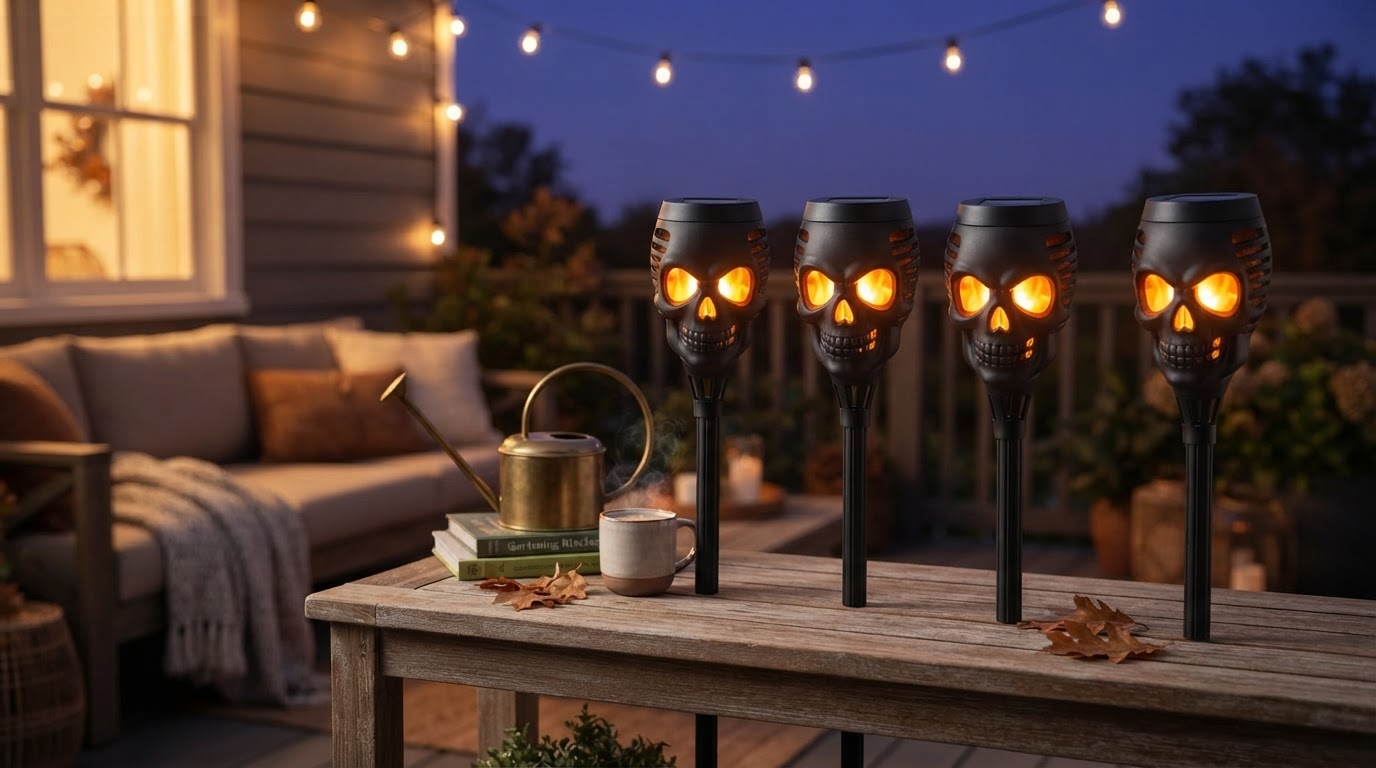
Solar Skull Torch Lights: Analyzing Skeleton Arm Stakes
 Priya RamanSenior Analyst
September 16, 2026 — The rise of modular yard displays has positioned Solar Skull Torch Lights as a central component for homeowners integrating skeleton arm solar stakes into complex seasonal lighting arrays.
While traditional lawn ornaments often rely on static plastic molds, modern decorative lighting requires a more technical approach to energy conversion and placement. Industry data suggests that consumer interest in high-efficiency solar lighting has increased as users look for ways to reduce cord clutter in high-traffic garden areas. This shift toward autonomous power makes the integration of themed elements like skeleton arms more feasible for long-term seasonal use. To evaluate these components effectively, one must look past the aesthetic and focus on the mechanical viability of the stake system.
The Three-Axis Integration Framework
When assessing how skeleton arm solar stakes perform alongside Solar Skull Torch Lights, two axes matter here: the light-to-shadow ratio and the structural integrity of the ground anchor. Think of it as a matrix of visibility versus stability. In this framework, the first axis is the luminosity of the integrated LED, which must provide enough throw to illuminate the surrounding ground without washing out the detail of the skeletal hand. The second axis is the solar conversion rate, ensuring the internal battery can sustain a full cycle from dusk until dawn. The third axis is the physical stake design, which requires a reinforced tip to prevent leaning in soft or saturated soil.
Once you see it this way, the technical requirements become clear. For a standard installation, the decision rule is to prioritize units that feature a multi-point ground contact system. While specific lumen counts vary by model, the most effective setups utilize a 600mAh Ni-MH battery to ensure consistent output during the shorter daylight hours of late autumn. This power profile allows the lights to maintain a flickering flame effect that mimics traditional torches without the fire hazard. Proper integration requires spacing these stakes approximately four feet apart to maximize coverage while maintaining the intended atmospheric shadows. Users should also ensure that the sensors are not obstructed by taller garden elements, as this can lead to premature battery drain or inconsistent activation cycles. For those planning complex layouts, reviewing Solar Skull Torch Lights for Seasonal Yard Layouts provides additional context on spatial arrangement.
Expert tip: To maximize the lifespan of your stakes, apply a thin layer of silicone lubricant to the connection points between the arm and the stake to prevent moisture ingress during heavy fall rains.
Maintaining a cohesive aesthetic requires understanding if these units work as Halloween garden stakes in varied climates. Furthermore, the longevity of any outdoor lighting depends on meeting the three durability benchmarks common to high-quality solar hardware. When these technical factors are met, skull garden torches solar powered options offer a reliable alternative to wired systems.
Shop Solar Skull Torch Lights.