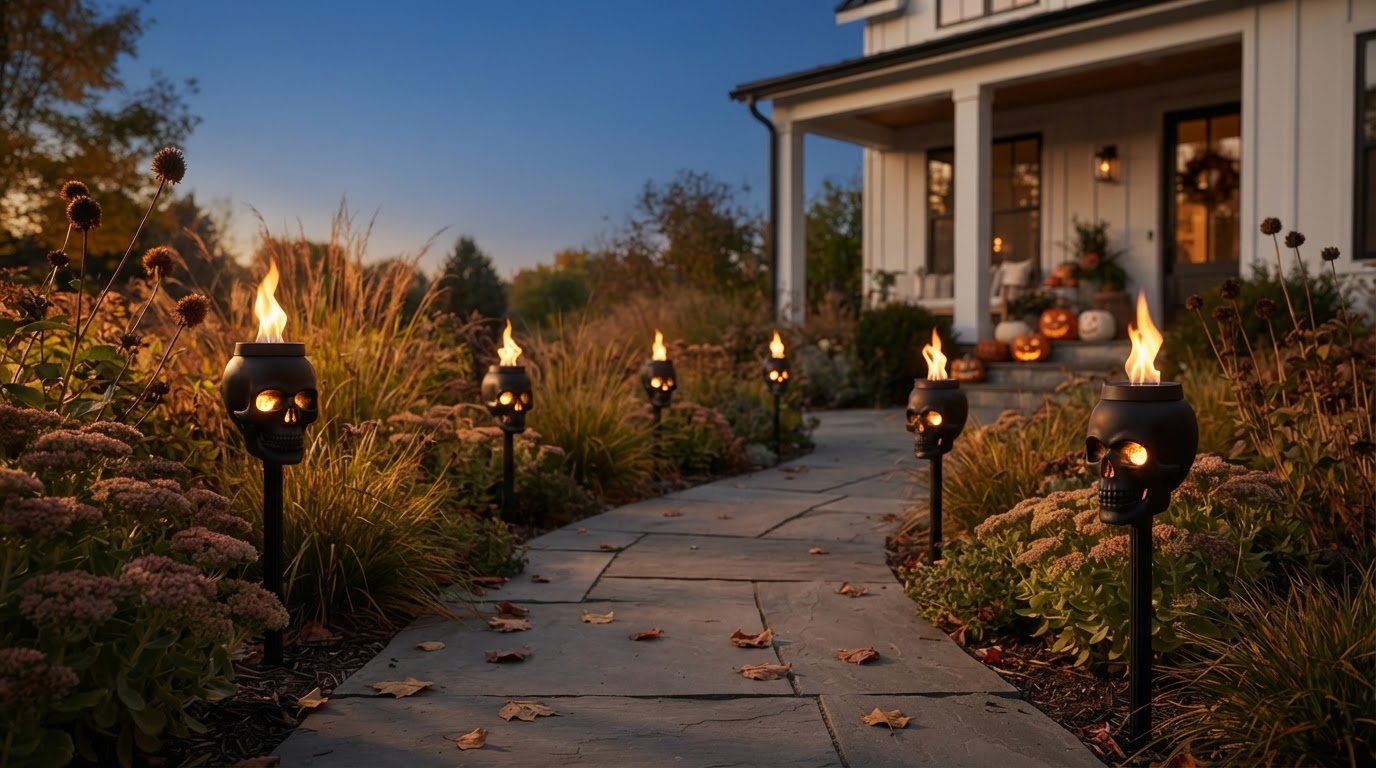
How do Solar Skull Torch Lights simulate realistic flames?
 Maya ChenContributing Editor
September 19, 2026 — Solar Skull Torch Lights utilize a synchronized array of warm-toned LEDs and programmed logic to mimic the irregular flickering of a natural gas flame. The conventional wisdom says that all flickering solar lights are created equal, but the actual performance hinges on the specific LED density and the quality of the translucent resin housing.
Here's the part nobody talks about: the visual fidelity of these units isn't just about the light source, but the refractive properties of the skull-shaped casing. Homeowners often prioritize aesthetic over lumen output, yet the efficacy of the flame effect is what determines if the installation looks like a professional landscape feature or a plastic novelty. Understanding the intersection of IP65 weatherproofing and battery discharge rates is essential for maintaining this effect throughout the night.
How does the LED flickering technology work in skeleton torches?
Solar Skull Torch Lights achieve a realistic flame effect by cycling through a non-linear sequence of brightness levels across multiple LED nodes. While many budget options use a simple on-off blink pattern, high-quality skeleton torches employ a pulse-width modulation (PWM) controller that varies the intensity of each diode independently. According to technical specifications found on Inspire Uplift, these units often feature a realistic flame simulation design that creates a moving firelight effect rather than a static glow. This simulation relies on the internal controller's ability to mimic the chaotic movement of fire, which is further diffused by the internal geometry of the skull frame. Run the math: if a unit lacks at least 12 to 33 individual LED beads, the 'flame' will appear choppy and artificial to the naked eye. The integration of this technology into a sustainable landscape design with Solar Skull Torch Lights allows for a cohesive nocturnal aesthetic without the fire hazard of traditional oil torches.
What determines the duration of the flickering effect each night?
The duration of the flame effect is dictated by the photovoltaic conversion efficiency of the monocrystalline or polycrystalline solar panel and the milliampere-hour (mAh) capacity of the internal battery. Most skeleton flame torches require between 6 to 8 hours of direct sunlight to reach a full charge, which typically yields 8 to 10 hours of illumination. Data from eBay listings for 12-piece sets indicates that these units are built with IP65 waterproof ratings to ensure that moisture does not degrade the battery terminals or the PCB controller over time. If the panel is obscured by shadows or debris, the voltage drop will cause the flickering effect to dim or cease prematurely, regardless of the LED quality. I'll change my mind when solid-state batteries become the standard for garden stakes, but until then, the limiting factor remains the chemical storage capacity of the Ni-MH cells. Users planning a spooky outdoor solar lighting decoration setup must account for the specific placement of these stakes to maximize solar gain during daylight hours.
Quick answers
Q: Are Solar Skull Torch Lights durable enough for winter use? A: These units carry an IP65 waterproof rating, meaning they are protected against low-pressure water jets and dust. While they withstand rain and snow, the reduced daylight hours in winter will significantly shorten the nightly flame duration to approximately 3-4 hours.
Q: How many LEDs are required for a convincing flame effect? A: Effective simulation typically requires a minimum of 12 LEDs, though premium models utilize up to 96 LEDs to create a fluid, dancing motion. Solar Skull Torch Lights focus on a balance between LED count and battery conservation to ensure the light lasts until dawn.
Q: Can the internal batteries in these skull torches be replaced? A: Most models use a standard 1.2V AA Ni-MH rechargeable battery that can be accessed by unscrewing the solar panel housing. Replacing these every 12-18 months is necessary to maintain the 8-hour discharge cycle as the original cells lose their charge-holding capacity.
For further information on installation, see the 5-step spooky lighting setup with Solar Skull Torch Lights. Learn more about Solar Skull Torch Lights at https://solyraskulltorch.com.
Sources
- Skeleton Diamond Simulation Flame Lights Outdoor Solar LED G
- 12Pcs Solar Torch Skull Light Flickering Flame Waterproof ... - eBay
- Flickering Flame Solar Stake Lights (6 Pack) - YouTube